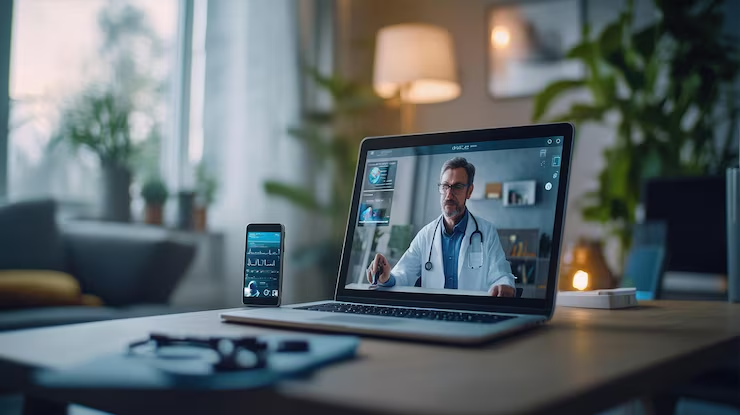
A busy running mom, caught in the sight of visitors after her daughter’s football exercise. She’s worn out, stressed, and struggling to lose the extra weight she’s been sporting for years. She would not have time for weekly in‑person health center visits. So, she turns to telehealth weight loss services, a remote doctor consults her, prescribes a GLP‑1 medication, and her treatment arrives at home. Sounds too good to be true? Maybe. But this is exactly the kind of scenario where the best telehealth services for weight loss are booming, and there are real pros and real pitfalls.
In this blog, you’ll learn the advantages and drawbacks of telehealth for weight loss, grounded in the latest evidence, and whether it’s truly effective in 2025.
Why Telehealth Is So Popular for Weight Loss
- Telehealth makes it easy. No commute. No waiting rooms.
- Platforms can combine virtual coaching, prescription medications (like GLP‑1), and remote monitoring.
- Many users are turning to telehealth weight loss services because they want scalable, doctor-led care without the hassle of in-person visits.
There’s solid data behind the hype. In a 2025 outcomes study of more than 66,000 members on a telehealth obesity‑care platform, participants saw a mean of ~10% weight loss in 12 months, and those who engaged weekly lost up to ~12%. Business Wire: In real‑world settings, telehealth delivered results comparable to clinical trials.
The Pros of Using Telehealth for Weight Loss
Accessibility & Convenience
Telehealth flattens geography. If you live in a small town or have a packed schedule, remote visits let you get treatment from home. That’s one of the biggest draws of telehealth weight loss services: flexibility.
Evidence-Backed Outcomes
The facts are promising: a 24-week telemedicine obesity application combining conduct education and long-term anti-obesity medications caused an average weight reduction of 12. Three%.
Also, actual-world telehealth weight problems clinics handing over GLP-1 medicinal drugs document similar weight loss consequences.
Scalability & Cost Efficiency
Telehealth can scale much faster than brick-and-mortar clinics. Coaching delivered by video or phone, combined with remote monitoring, can reach far more people. A randomized study even showed that adaptive coaching in an online weight program improved outcomes cost-effectively.
Privacy & Comfort
Some people feel less judged on video or calls than in person. Telehealth also allows for discreet delivery of treatment, including weight‑loss medications, which can be a big trust factor.
Long-Term Adherence & Maintenance
One major challenge: keeping people engaged over the long haul. Many telehealth weight loss programs see dropouts or weight regain after 6 months if there’s not strong maintenance planning.
Even app‑only interventions tend to fade as users lose motivation or don’t feel personalized enough.
Side Effects & Safety
When medications are prescribed remotely, like GLP-1 agonists, side effects such as nausea or GI issues are common. In a large DTC (direct-to-consumer) telemedicine study of liraglutide, nearly 40% reported adverse events.
Without an in-person examination, some labs or vital signs may be missed or under-monitored.
Privacy and Regulatory Risk
Handling touchy fitness statistics over virtual structures introduces risk. As telehealth grows, so do issues approximately HIPAA compliance and state-level client health statistics laws.
Also, tele-prescribing of weight-loss medications must navigate regulatory requirements carefully.
One-Size-Fits-All Approach
Some programs lack personalization. Rigid calorie counting, generic advice, or automated messages can disengage users.
Behavioral and mental health aspects (like stress eating, anxiety) may be under-addressed in purely digital programs, unless therapy is integrated.
Lack of Physical Exams
Remote care may not trap positive conditions or headaches that a health practitioner might identify in an individual. For instance, without bodily checkups, you might pass over signs and symptoms like edema, injection-website issues or other diffused medical red flags.
Is Telehealth Effective for Weight Loss? The Verdict
Telehealth may be a pretty effective way to lose weight, mainly when using the pleasant telehealth offerings for weight reduction that combine medical treatment, behavioral guide, and far off monitoring. The statistics show that humans can acquire clinically meaningful weight loss in 6–one year with telehealth.
However, and this is crucial, not all telehealth packages are the same. The simplest ones integrate medical doctor supervision, medicine, behavioral therapy, and dependent follow-up. Programs that depend in simple terms on self‑tracking or app nudges have a tendency to falter over the years.
How to Choose the Best Telehealth Weight Loss Service
If you’re considering telehealth for weight loss, here are a few practical tips:
Check Clinical Credentials
Look for programs with board-certified physicians, licensed coaches, or registered dietitians.
Ask About Monitoring
Do they require labs or regular check-ins? How often will a provider review your progress?
Behavioral Support
Is there coaching, therapy (ACT or CBT), or structured follow-ups? Evidence shows behavioral components improve long-term success.
Medication Transparency
Are they prescribing GLP-1 or other anti-obesity meds? What are the side effects? Do they clearly disclose costs, safety, and delivery?
Privacy & Data Safety
Make sure the platform is HIPAA compliant and transparent about data usage and third-party sharing.
Engagement Tools
Do they use remote scales, fitness trackers, or app log-ins? These tools help maintain accountability.
Real‑World Example: A Large-Scale Telehealth Success
One standout case: Found, a leading telehealth obesity-care company, analyzed outcomes from more than 66,000 members. Business Wire. Their real-world data showed sustained, clinically significant weight loss, especially among members who engaged consistently. That kind of scale + success is powerful evidence that telehealth weight loss services, when done right, really work.
Conclusion
Telehealth for weight loss is not only a fashion. It’s an effective, scalable manner to get access to expert care, get prescriptions like GLP-1 and get hold of behavioral training all from home. The pros are real accessibility, price-performance, proof-based outcomes and comfort. The cons are also actual: adherence challenges, privacy risks and ability aspect results.
If you’re weighing your options, make sure to pick one of the wellviameds that offer personalized care, monitoring, and behavioral support. And always talk to a qualified provider before starting.
FAQs
Are telehealth weight loss services safe?
Yes, when done through reputable platforms with licensed physicians, proper labs, and monitoring. But there are side effects especially with prescription medications so safety depends on program quality.
How much weight can you realistically lose using telehealth for weight loss?
Studies show average loss ranging from 5–12% over 6–12 months with well‑designed telehealth weight loss services.
Do I need to use a GLP-1 or other anti-obesity medication in telehealth programs?
Not necessarily. Some programs rely more on behavioral therapy and coaching, while others combine coaching with prescription medications. Choose based on your goals and medical needs.
How do I choose the best telehealth services for weight loss?
Look for platforms with medical supervision, coaching, remote monitoring, clear privacy policies, and long-term follow-up plans.